Pastoral Clarification Regarding the Parish Chapel
Dear parishioners,
On the Solemnity of the Body and Blood of Christ, during the Sunday Masses, I asked a simple question: “How many people spend at least one hour a week in adoration before the Blessed Sacrament in the chapel?”
Throughout four Masses attended by approximately 1700 people, only 9 raised their hands. I mention this not to criticize anyone, but to honestly address the actual situation.
The chapel has been loved by many people over the years, and I deeply respect that. Many parishioners have prayed there, lit candles there, and honoured San Francesco di Paola there. The sacrifices of parents and grandparents are part of this parish's history, and they deserve gratitude and respect.
At the same time, we must look at the pastoral, liturgical, and practical needs of the parish today.
The first and most important concern is the Eucharist.
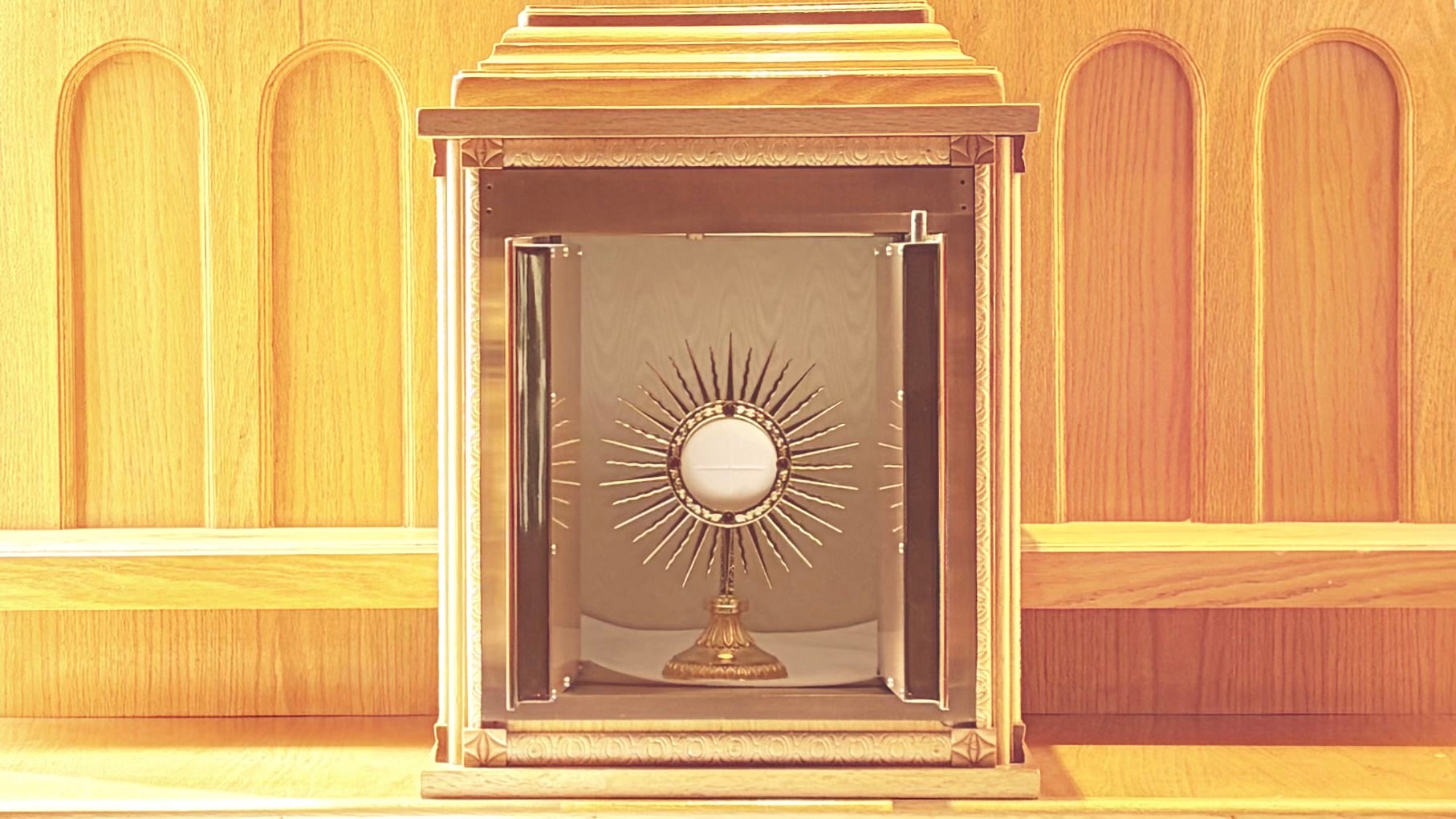
At present, there are two tabernacles at the same level in the church building. This creates confusion rather than clarity. When people enter a Catholic church, they should clearly know where the Blessed Sacrament is reserved and where to direct their reverence, silence, prayer, and genuflection.
The Code of Canon Law states: “The Most Holy Eucharist is to be reserved habitually in only one tabernacle of a church or oratory.”... “The tabernacle in which the Most Holy Eucharist is reserved habitually is to be immovable, made of solid and opaque material, and locked in such a way that the danger of profanation is avoided as much as possible.” Canon 938 §§ 1-3.
The General Instruction of the Roman Missal says the same: “In accordance with the structure of each church and legitimate local customs, the Most Blessed Sacrament should be reserved in a tabernacle in a part of the church that is truly noble, prominent, readily visible, beautifully decorated, and suitable for prayer. The one tabernacle should be immovable, be made of solid and inviolable material that is not transparent, and be locked in such a way that the danger of profanation is prevented to the greatest extent possible.” GIRM 314.
This is not only a question of space. It is a question of Eucharistic faith. The tabernacle is not a storage place. It is the dwelling place of Christ, truly present in the Eucharist. For that reason, the sign should be clear: one church, one altar, one tabernacle, one Eucharistic centre.
A second concern is the attendance at the Eucharistic Adoration.
Adoration is a beautiful and holy devotion. However, when the Blessed Sacrament is exposed, it must never be left unattended. The Church teaches that “The Most Holy Sacrament, when exposed, must never be left unattended even for the briefest space of time. It should therefore be arranged that at least some of the faithful always be present at fixed times, even if they take alternating turns.” Redemptionis Sacramentum, 138.
At present, we do not have enough reliable, committed adorers to ensure this is properly done. This raises serious concerns about reverence, safety, and the risk of profanation.
As a pastor, I have the duty to protect the Blessed Sacrament and to ensure that Eucharistic devotion is carried out with dignity, responsibility, and fidelity to the Church.
A third concern is the need for a proper sacristy.
A sacristy is not simply a storage room. It is the place where sacred vessels, vestments, liturgical books, hosts, wine, and other items needed for Mass and the sacraments are properly prepared. It is also where priests, deacons, altar servers, and ministers prepare before the liturgy.
For many years, St. Joseph the Worker Parish has functioned without an adequate sacristy. Vestments, sacred vessels, books, and liturgical items are stored in different places, including the basement. This is not dignified, practical, or appropriate for a parish of our size. The Eucharist deserves better. The sacred vessels deserve better. The ministers who serve at the altar need a proper place to prepare. We have roughly 50 altar servers, 30 Extraordinary Ministers of the Holy Communion, and about the same number of Lectors and Ushers.
After talking with many people and doing some research, we determined that the current chapel space is the most suitable location for a Sacristy.
This is the main reason for the proposal to convert the present chapel into a sacristy. It is not being done to erase devotion to San Francesco di Paola. It is not being done to disrespect the Calabrese community. It is not being done to ignore the sacrifices of previous generations. It is being considered because the parish has a real and urgent need for a dignified sacristy, and because the Eucharistic life of the parish must be clear, reverent, and well ordered.
I heard about some personal opinions from parishioners and non-parishioners that the chapel and eucharistic adoration are two separate things. Historically, that is true. The chapel existed before regular adoration began. But today, the practical use of the chapel is closely connected to adoration and to the second tabernacle. Therefore, the issues cannot be completely separated.
Those personal opinions also say that restoring the former sacristy should be considered. That possibility has been considered. However, it does not adequately meet the parish’s present needs.
The proposed solution is the most suitable and practical way to provide the parish with the sacristy it needs while keeping the main church focused on the central tabernacle.
It is also important to note that a Catholic parish does not belong to a single cultural group, generation, or devotion. San Francesco di Paola is deeply loved, especially by many families of Calabrian heritage, and that devotion should continue to be honoured. But every part of the parish belongs to the whole parish community and must serve the mission of the parish.
The chapel was never meant to be a memorial preserved unchanged forever. Like every part of a parish building, it exists to serve the Church’s worship and mission. Throughout history, parishes have adapted their spaces as pastoral needs have changed. The best way to honour those who built this parish is not simply to preserve a room exactly as it was, but to continue their faith and sacrifice by ensuring that the parish can serve the people of God today and in the future.
I am also concerned that public personal opinions and campaigns can easily create division, misunderstanding, and hurt within the parish. Reasonable people can disagree, but we must not allow disagreement to damage the unity of the parish family. As Catholics, we must speak with charity, listen with respect, and follow the proper process of the Church.
During the Sunday masses, I urged people to respond prayerfully rather than emotionally.
I have also expressed my willingness to listen to anyone who wishes to discuss this matter. Kindly arrange an appointment with me beforehand.
Just to clarify, there is no need to contact the Bishop and the Cardinal, or any other office of the Archdiocese of Toronto, as they are already aware of the situation and will refer you back to me.
The goal here is to place Jesus more clearly at the centre of our parish life and to use the parish space for the good of the entire community. One church. One altar. One tabernacle. One Eucharist. One body in Christ.
Let us pray that this matter will be guided by truth, charity, reverence for the Eucharist, and love for the whole parish community.
Yours in Christ,
Fr Augusto Menichelli
Pastor